Explorer par catégorie
Égypte Expériences AR
Parcourez les expériences AR publiques dans Égypte et ouvrez les expériences qui vous semblent intéressantes.
Sous-catégories
0
Expériences
34
Expériences
Ouvrez n’importe quelle expérience intéressante et voyez comment ce format est utilisé en pratique.
rare
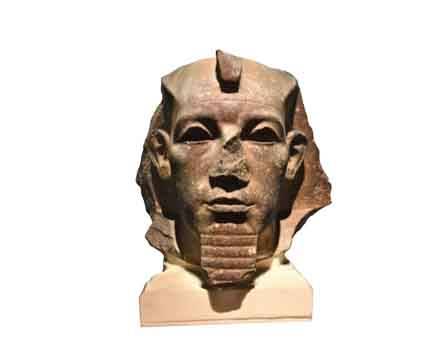
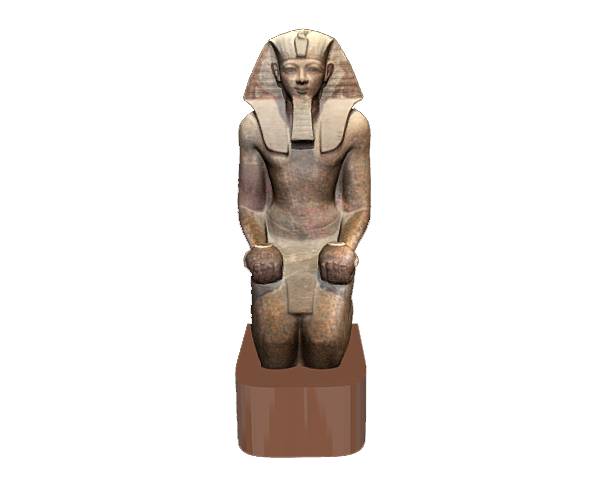
Statue of Hatshepsut
Knealing statue of Hatshepsut from her temple at Deir el-Bahri.
Ouvrir l’expérience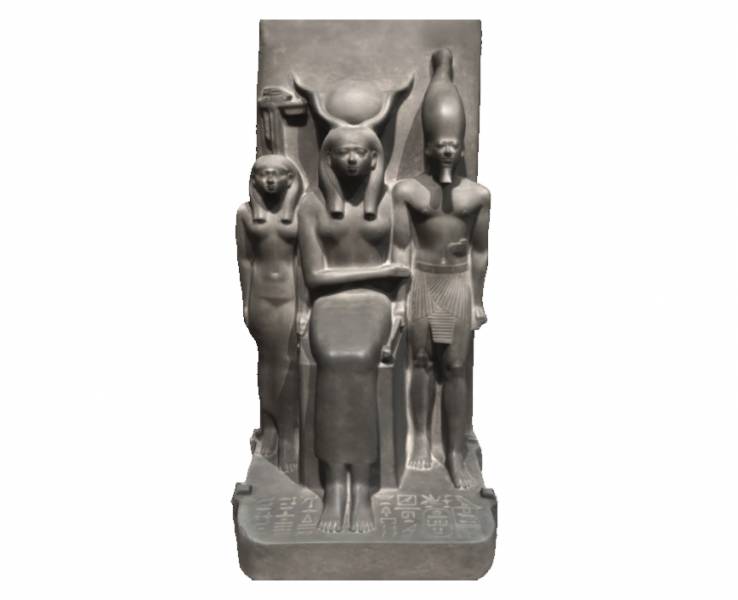
rare
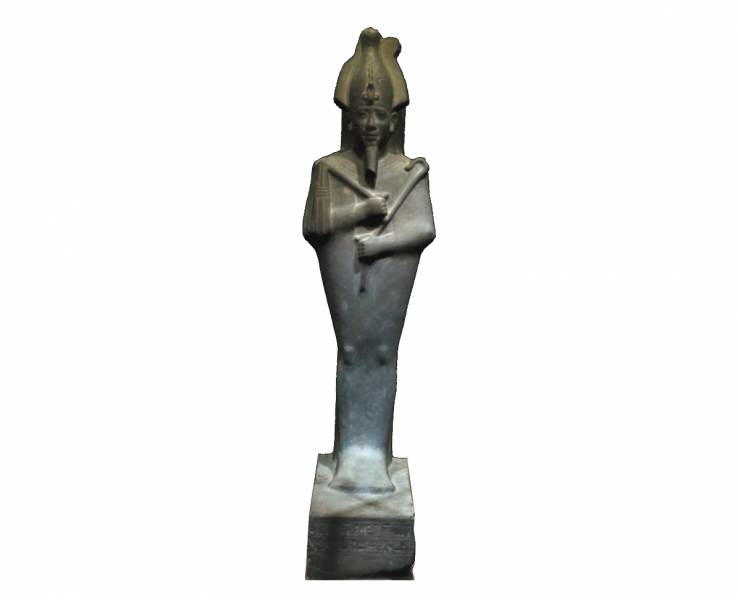
Statue of Osiris
Egyptian, Late Period, Dynasty 26, 664–525 B.C. Findspot: Giza, tomb G 7792, shaft A Height: 55 cm (21 5/8 in.) Greywacke Harvard University—Boston Museum of Fine Arts Expedition
Ouvrir l’expérience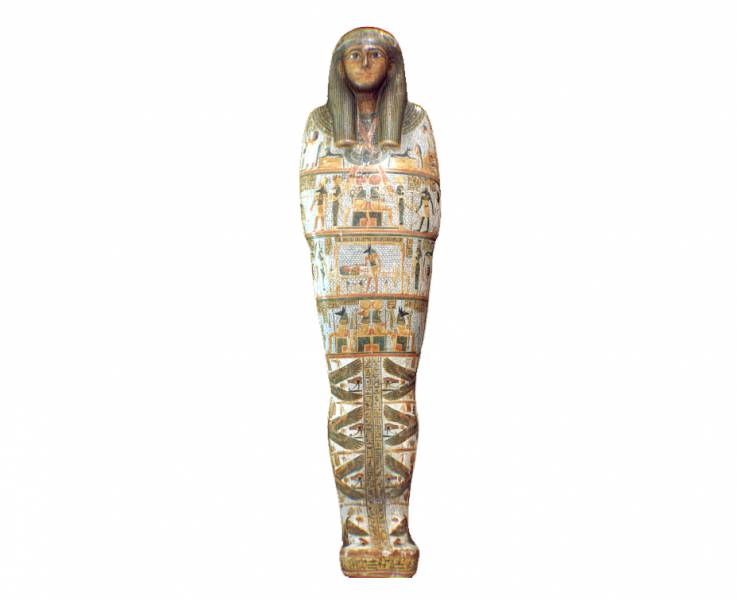
rare
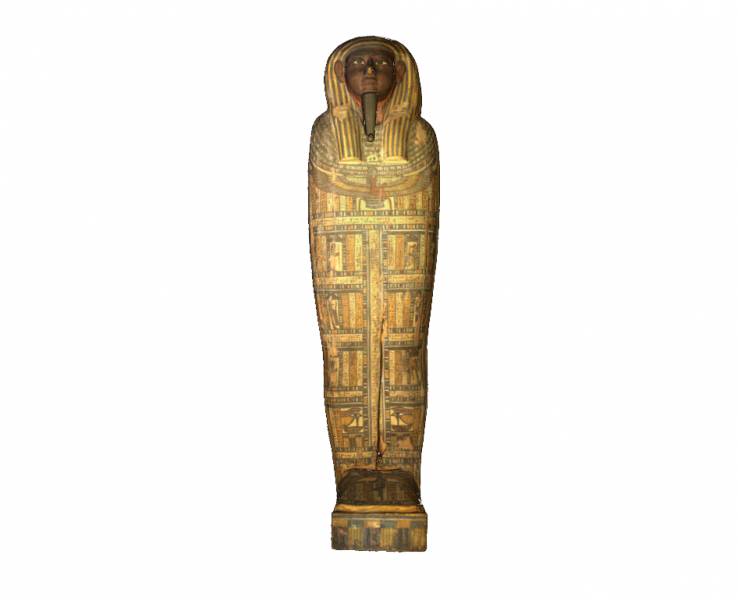
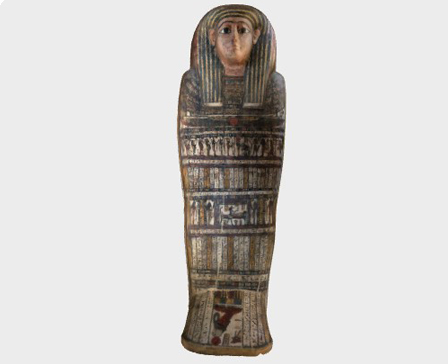
Coffin of Pa-di-mut
Egypt (Thebes, Deir el-Bahari) Dynasty 22, 945–712 BC Painted cartonnage (linen and plaster) Gift of Theodore M. Davis Harvard Museum of the Ancient Near East 1901.9.1 Pa-di-mut was a priest and metal engraver in the Temple of Amun-Re at Karnak, Thebes (modern Luxor). The cartonnage case that enclosed his mummy was unusually carved in relief in the plaster before painting. The images are related to Pa-di-mut’s successful entry into the afterlife. On his chest, the jackal-headed god Anubis attends to Pa-di-mut’s mummy. Above it is seated the hawk-headed sun god Re-Horakhty, crowned with a solar disk. The figure of the deified Eighteenth Dynasty king Amenhotep I (1525–1504 BC), patron of the necropolis/burial ground, replaces the usual image of the god Osiris on the back.
Ouvrir l’expérience
common
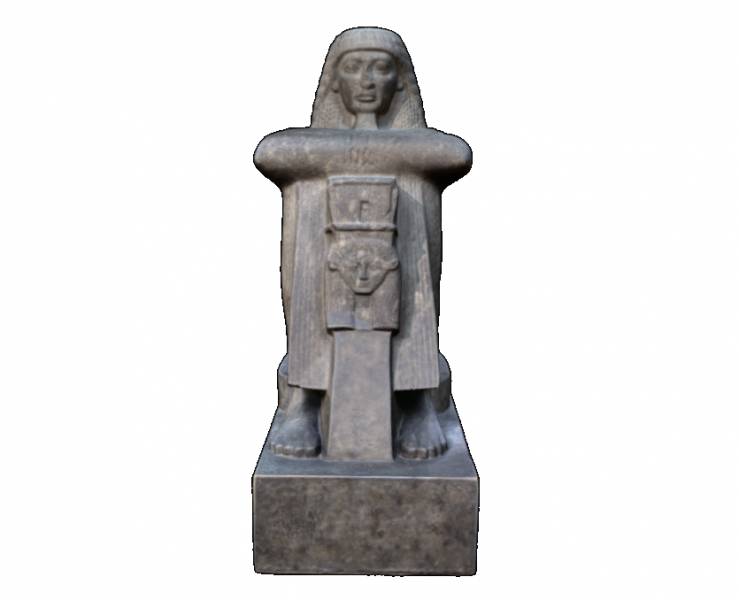
A statue of Roy, High Priest of Amun
Granodiorite squatting figure of Roy, High Priest of Amun during the reigns of Ramses II, Merenptah and Sety II, holding a Hathor-headed sistrum before, the dorsal pillar is inscribed with two vertical registers of hieroglyphs - invocations to Amun-Ra and Mut; lower section lost.
Ouvrir l’expérience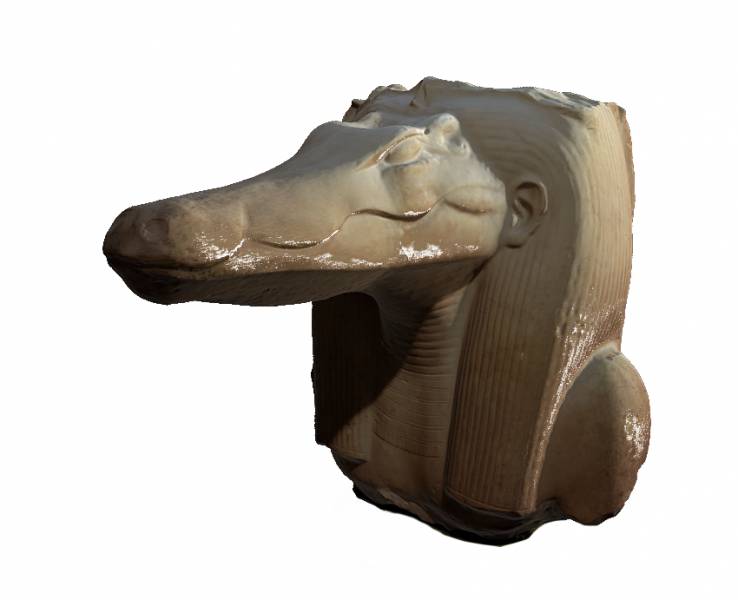
rare
Sobek, Ashmolean Museum
Middle Kingdom limestone head of a Statue of the God Sobek Shedeti Circa. 1859-1802 B.C. Taken from Egypt, Fayum, Hawara Dimensions: 54.5 × 51 × 48 cm
Ouvrir l’expérience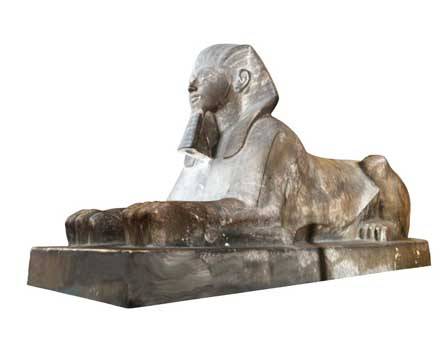
rare
Sphinx of Hatshepsut by danderson4
Red granite sphinx of Hatshepsut from Deir el-Bahari. Located in the Cairo Museum Ground Floor Gallery 6 Created from 149 photographs (18MP Cannon EOS Rebel T5i) using Agisoft Photoscan 1.4.3. November 17, 2018.
Ouvrir l’expérience
rare
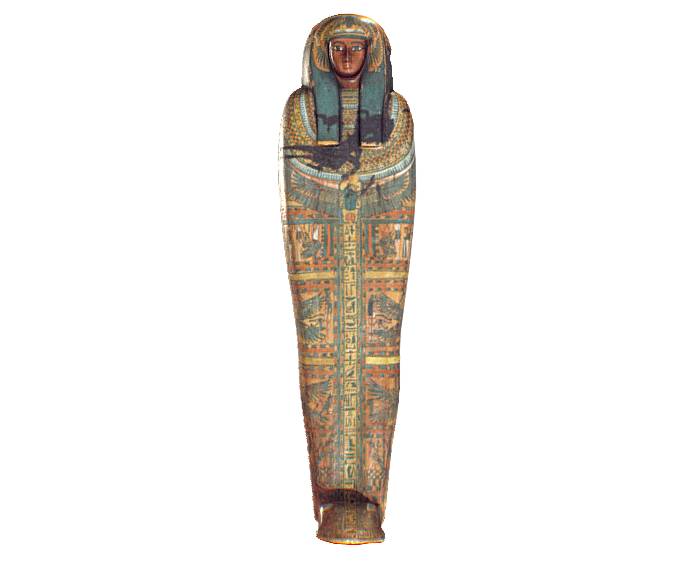
Coffin of Ankh-Khonsu
Egypt (Thebes) Dynasty 22, 945–712 BC Painted wood Gift of Theodore M. Davis Harvard Museum of the Ancient Near East 1902.50.9 Ankh-khonsu was a doorkeeper in the Temple of Amun-Re at Karnak. He inherited his position from his father Ankh-en-amun. His brightly painted coffin lid is covered with images of protective deities. Particularly prominent are winged scarab (dung) beetles, symbols of rebirth. One sits on Ankh-khonsu’s head and encircles his face with its wings. A second scarab covers his chest. Both scarabs hold a shen hieroglyph, symbol of eternity, with their hind legs in place of a dung ball. Offering spells including Ankhkhonsu’s name are written on the outside of his coffin. Traces of resins (now black) and water poured over it during his funeral are visible on the top and sides of the coffin.
Harvard Museum of the Ancient Near East
Ouvrir l’expérience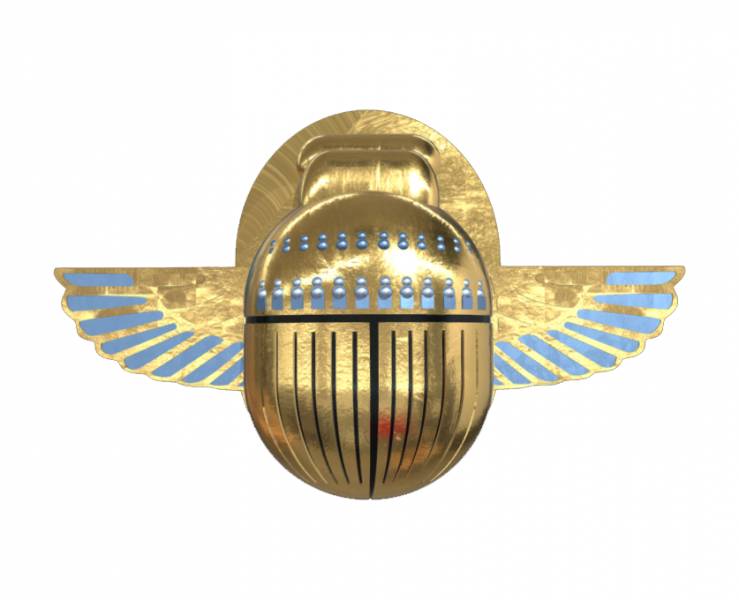
epic
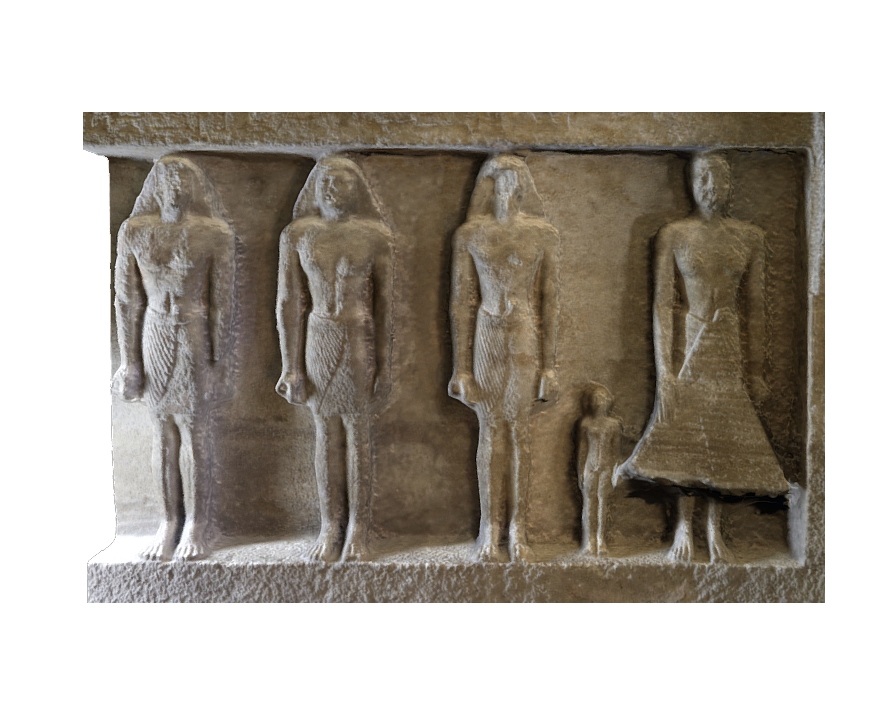
Mastaba Of Qar, Giza Egypt
Statues in the 6th Dynasty mastaba of Qar at Giza.
danderson4
Ouvrir l’expérience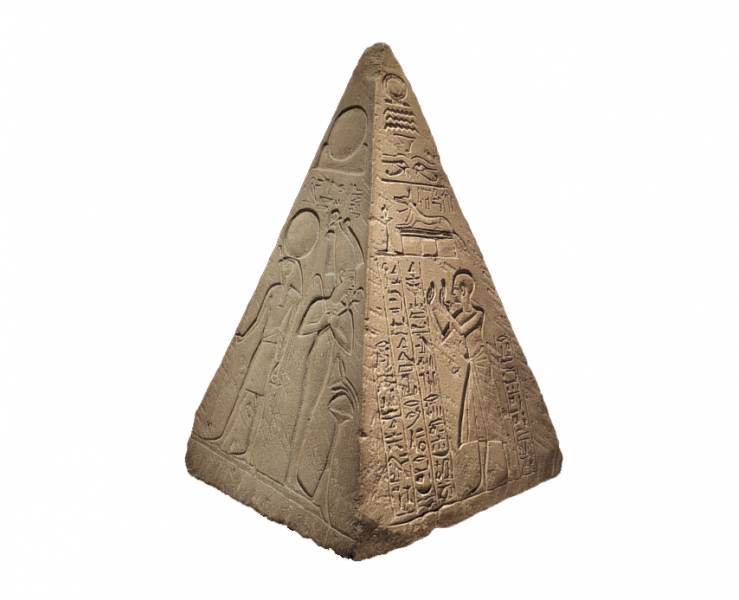
epic
Pyramidion of Ptahemwia
rom the 18th Dynasty onwards, mudbrick pyramids were used to mark the tombs of private individuals. These small structures were topped by a stone pyramidion. Many such pyramidia have survived, and most of them were found in Thebes (at Deir el-Medina) and Saqqara (the burial ground of the city of Memphis). They are typically decorated with solar motifs. On the front of this particular example, the deceased Ptahemwia is depicted standing in adoration. The hieroglyphic text is dedicated to Re-Horakhty and Osiris. Above the deceased, we see the jackal god Anubis. The wife of the deceased and their three children are shown standing in adoration on the right side, with two other women in the back. The left side depicts the gods Re-Horakhty and Osiris.
The National Museum of Antiquities
Ouvrir l’expérience
rare
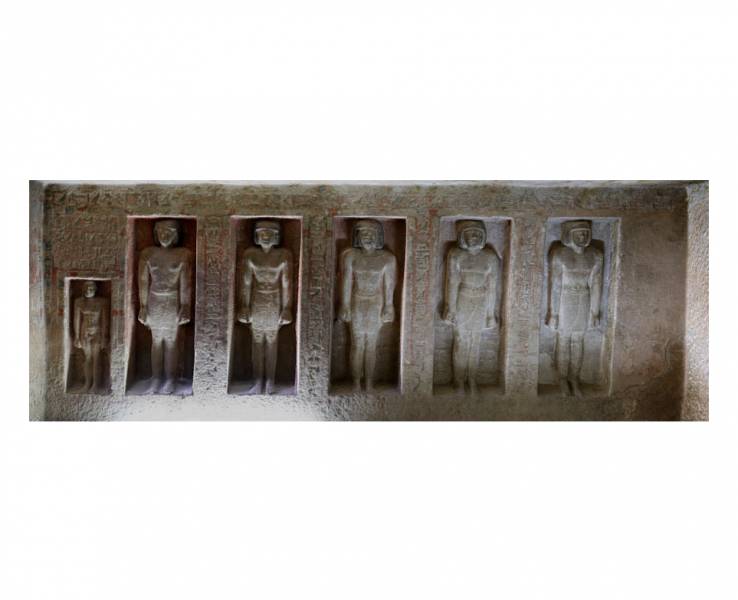
Mastaba Of Idu, Giza Egypt
Carved statues in the mastaba of Idu at Giza, Dynasty 6.
danderson4
Ouvrir l’expérience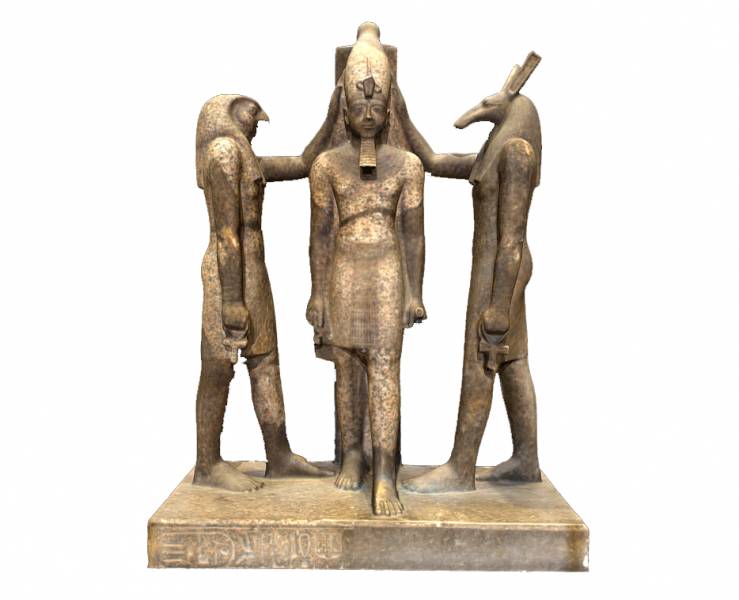
common
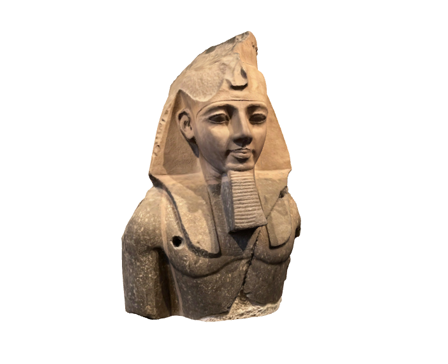
Statue of Ramses III with Horus and Seth
Granite triad of Ramses III with the gods Horus on his right and Seth on his left. Currently in the Egyptian Museum, Cairo.
danderson4
Ouvrir l’expérience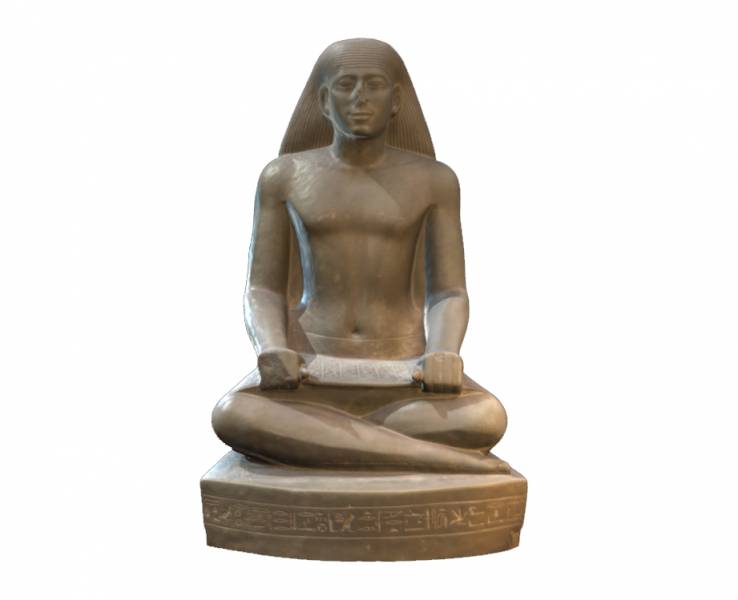
rare
Seated statue of Nespekashuty
Late Period, Saite Dynasty 26 Reign of Psamtik I, 656–610 B.C. From the Karnak Cachette Egyptian Museum, Cairo JE 36665 Photogrammetry by Peter Der Manuelian; 3D modeling in Metashape and Zbrush by Mohamed Abdelaziz.
pmanuelian
Ouvrir l’expérience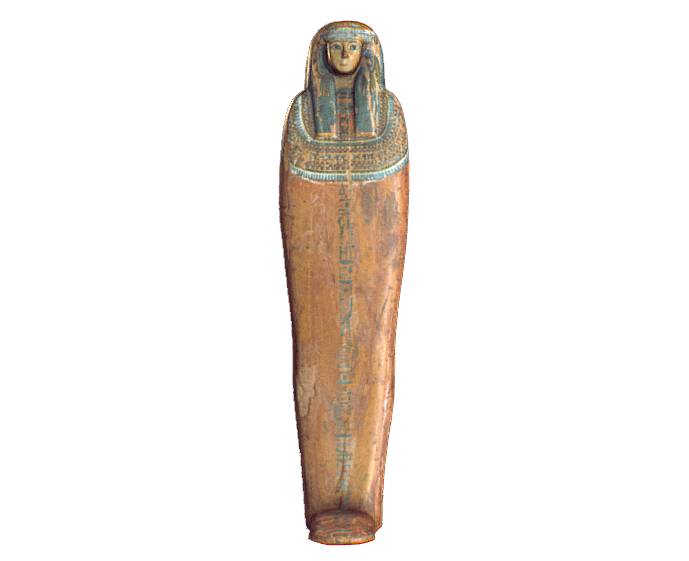
rare
Coffin of Mut-iy-iy
Dynasty 22, 945–712 BC Painted wood Gift of Theodore M. Davis Harvard Museum of the Ancient Near East 1902.50.10 Mut-iy-iy was a singer in the Temple of Amun-Re at Karnak. The exterior of her coffin is painted red to imitate cedar and simply decorated. Besides her painted wig, face, and floral collar, there is only a single painted column of hieroglyphs with Mut-iy-iy’s title and name at the end. Inside the bottom half of the coffin is an image of the sky-goddess Nut. She wears a garment of blue, the celestial color, and carries an ankh, symbol of life, in each hand. Her arms, extending up the sides of the coffin, embraced the mummy lying inside it. Tracks from sacred water poured over the coffin during Mut-iy-iy’s funeral can be seen on the lid and sides.
Harvard Museum of the Ancient Near East
Ouvrir l’expérience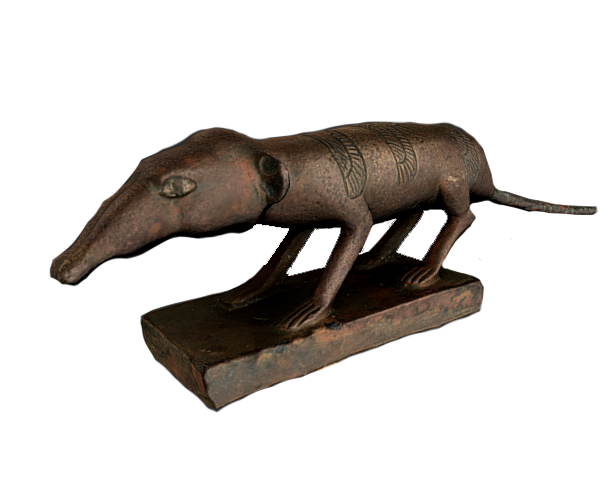
rare
Spitzmaus
Die Spitzmaus mit langgestrecktem, walzenförmigen Körper, deutlich abgesetztem Hals, langer Schnauze, kleinen Augen und Ohren ist naturrealistisch gearbeitet. Das Augenweiß ist mit Silber ausgelegt worden. Sie misst mit Sockel ca. 4 x 16,3 x 6,5 cm und datiert in die Spätzeit (ca. 664–332 v. Chr.). Auf dem Rücken befinden sich vom Kopf zum Schwanz drei fein ausgearbeitete Verzierungen: eine Flügelsonne, ein geflügelter Falke sowie ein geflügelter Geier. Die Spitzmaus war dem Falkengott Horus in Letopolis heilig. Inv. Nr. 1101
Museum der Universität Tübingen MUT
Ouvrir l’expérience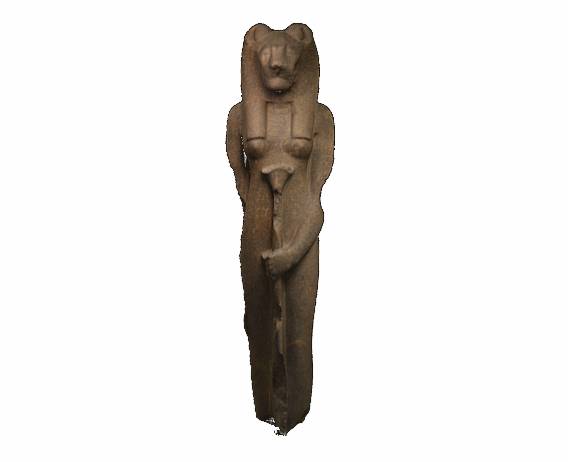
common
Sekhmet
EA520: An 18th Dynasty granodiorite statue of Sekhmet, standing, with papyrus-staff before, base and arms missing or damaged.
The British Museum
Ouvrir l’expérience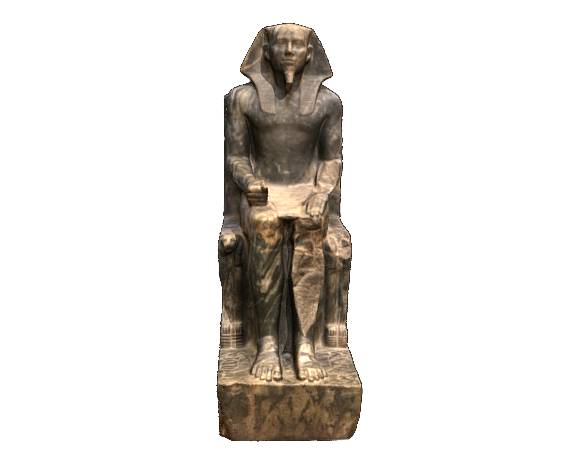
rare
Statue of Khafre, Egyptian Museum, Cair
tatue of 4th Dynasty pharaoh Khafre in the Egyptian Museum, Cairo. Similar, but not identical to the seated statue of Khafre in the Aswan Museum
danderson4
Ouvrir l’expérience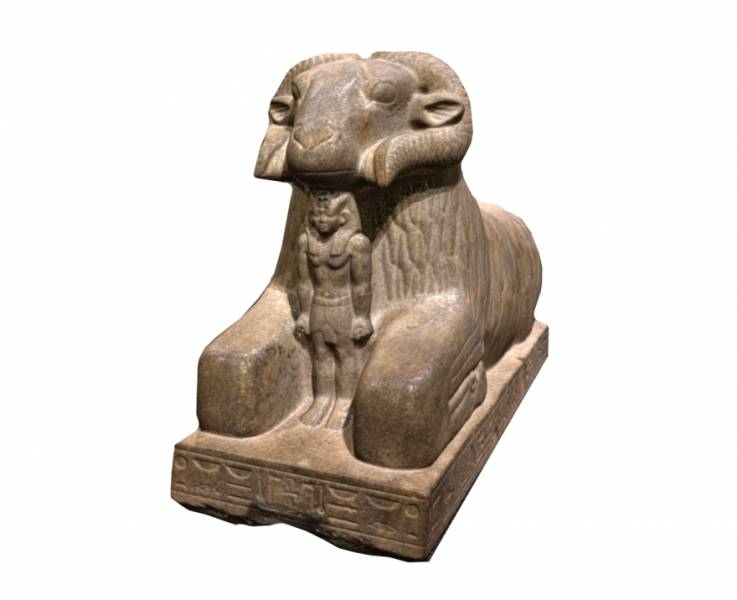
rare
Amun Ram Ashmolean
A statue of the ram of Amun from the Ashmolean Museum, Oxford.
danielpett
Ouvrir l’expérience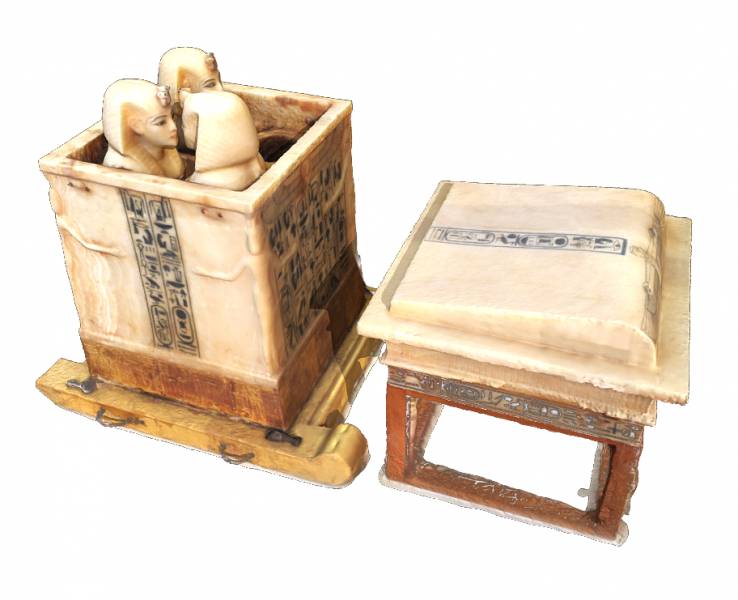
rare
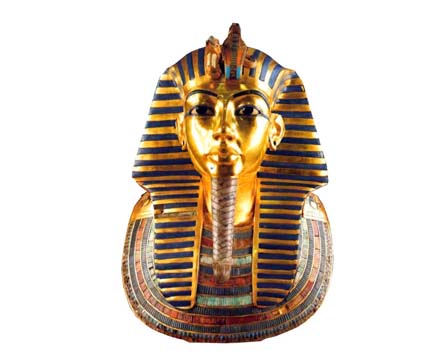
Canopic Chest of Tutankhamen
Canopic Chest of Tutankhamen in the Egyptian Museum, Cairo.
danderson4
Ouvrir l’expérience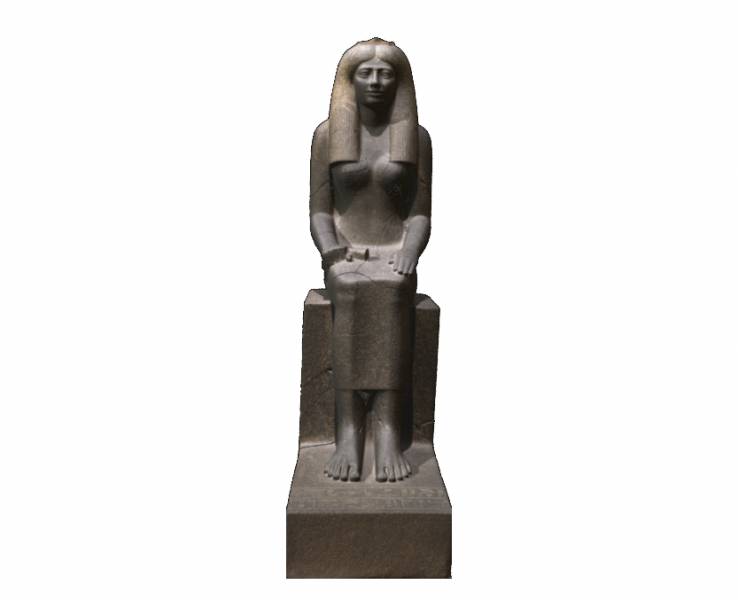
rare
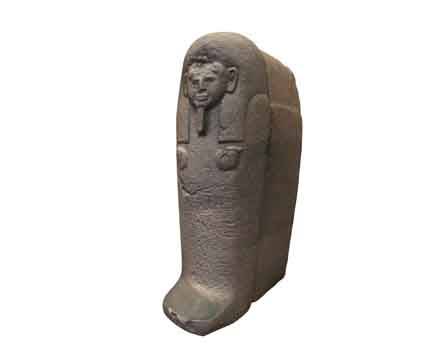
Sarcophagus by SenYul
Granite sarcophagus of scribe Hunefer, 19th Dynasty Egypt, cca. 1225 BCE, during the reign of Ramsses II. Given in 1835 to Fitzwilliam Museum, Cambridge, UK.
Ouvrir l’expérience
ARLOOPA Studio
Créez votre propre expérience AR
Utilisez ARLOOPA Studio pour créer et publier une expérience similaire pour votre campagne, votre lieu, votre produit ou votre audience.