Technology guide
How to run multiple face masks in one AR experience without turning it into a performance problem
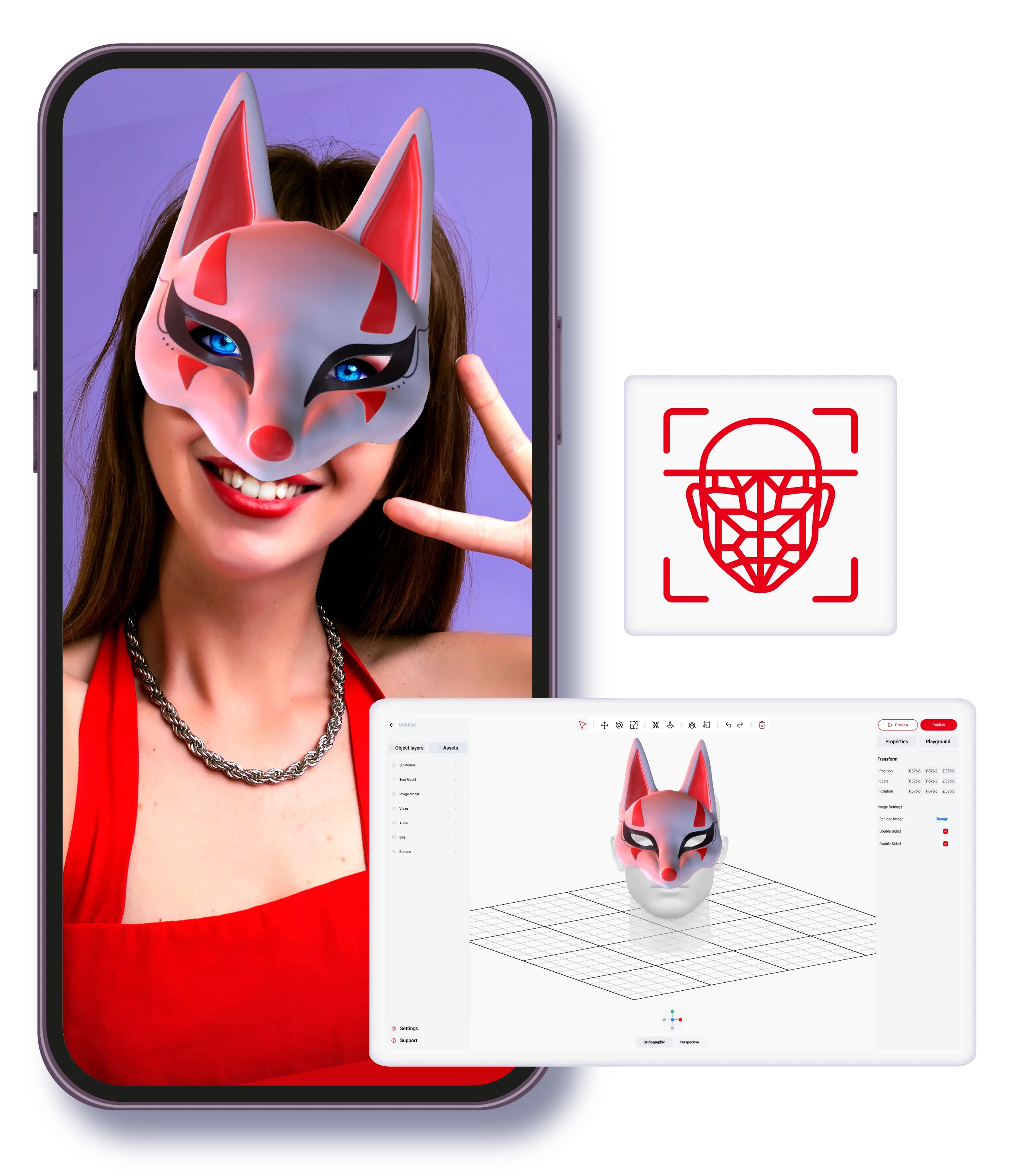
Many campaigns need more than one face mask in the same experience: brand variants, product collections, event themes, character sets, or language-specific creative treatments. The opportunity is strong, but so is the risk. If mask selection, asset load, and device QA are not planned early, the experience can feel slow or unstable on real phones. This guide explains how teams can support multiple face masks in one experience while keeping the workflow maintainable and user-friendly.
Best for
Campaigns that need one face-tracking experience with several mask variants users can switch between.
Watch out for
Stacking too many high-weight masks without a loading strategy and fallback behavior for weaker devices.
ARLOOPA fit
Teams that want multi-mask logic in a no-code workflow with repeatable publish-and-update control.
When to use it
Multiple masks in one experience work best when users need choice, not separate links
A single-mask experience is simpler, but it can be limiting when the creative goal is personalization or comparison. If users are expected to browse options, one experience with mask switching usually performs better than sending users through separate experiences for each variant.
The key is to keep interaction simple. One clear start flow and one understandable switch mechanism often outperform complex filter menus.
- •Use one experience with multiple masks when comparison and personalization matter.
- •Keep onboarding short before offering mask selection.
- •Avoid separate links for every mask unless campaigns are intentionally isolated.
Interaction design
Mask-switch UX should be immediate, predictable, and lightweight
Users need fast confirmation when changing masks. If switching takes too long or behaves inconsistently, engagement drops quickly. A strong pattern is to load a default mask fast, then expose a clear selector for additional masks with visible loading state when needed.
Teams should also define a fallback for unsupported devices. Graceful fallback preserves campaign quality even when full multi-mask behavior is not available.
- •Show one default mask first, then let users switch.
- •Use clear visual state to indicate which mask is active.
- •Define fallback behavior for older devices and weaker front cameras.
Performance
Multi-mask experiences need asset budgets and staged loading
Most performance issues come from loading every high-weight mask up front. Instead, teams should prioritize initial responsiveness and load additional assets progressively. This keeps time-to-first-interaction low while still enabling richer options.
Performance testing must include mid-range devices, varied lighting, and different camera quality tiers because face tracking behavior can vary significantly across hardware.
- •Set per-mask asset budgets before creative production starts.
- •Use staged loading to protect first interaction speed.
- •Validate switching latency on real target devices, not only studio hardware.
Why ARLOOPA
ARLOOPA Studio helps teams manage multi-mask face experiences without heavy technical branching
When teams handle multiple masks across campaigns, operational clarity matters as much as visual quality. ARLOOPA Studio is useful because it supports face-tracking creation in a no-code workflow where teams can iterate quickly and keep ownership close to campaign operators.
That makes it easier to maintain consistency across mask variants while still adapting to new briefs, seasonal updates, or regional creative requirements.
- •Keep mask variants under one managed experience workflow.
- •Iterate quickly without rebuilding the entire experience for each update.
- •Connect face-mask campaigns to broader industry pages such as fashion, media, and events.
FAQ
Multiple face masks in one experience FAQ
Can one AR experience contain multiple face masks?
Yes. A single face-tracking experience can include several masks and let users switch between them if the workflow and performance plan are designed correctly.
What is the biggest risk in multi-mask setups?
The biggest risk is performance regression from loading too many heavy assets without staged loading and device-aware QA.
Should teams launch with all masks at once?
Not always. Many teams launch with a small curated set first, validate switching behavior, then expand once stability is proven.
How does ARLOOPA Studio help with multi-mask workflows?
ARLOOPA Studio supports face-tracking experiences in a no-code environment so teams can manage multiple mask variants and updates without relying on a heavy custom-development cycle.
Existing Studio pages
Related Solutions
Use these established Studio pages when you need deeper solution or industry detail beyond this guide.
Face Tracking AR Guide
Use face tracking AR when self-expression, brand play, or visual personalization is the core interaction.
Open pageFashion
See how fashion brands use virtual try-on, WebAR, and 3D product visualization to launch interactive campaigns, product previews, and branded AR experiences.
Open pageMedia and Entertainment
Explore how media and entertainment teams use WebAR, face filters, interactive storytelling, and branded AR campaigns to create memorable audience experiences.
Open pageEvent Experiences
Create AR booth experiences, trade show activations, sponsorship layers, scavenger hunts, and product reveals with WebAR and no-code AR tools that increase attendee engagement.
Open pageContinue reading
Related Reading
These supporting guides answer the next practical questions readers usually have before launching an AR project.
Markerless WebAR Experiences
Use this guide to plan markerless WebAR experiences with clear interaction logic and practical rollout discipline.
Read guideMarkerless vs Marker-Based WebAR
Use this comparison to choose markerless or marker-based WebAR before asset production and QA scope are locked.
Read guideWebAR Use Cases
Use these WebAR scenarios to decide where browser-based access has a genuine business advantage.
Read guideHow to Create Face-Tracking AR
Plan face-tracking AR for brand filters, events, fashion, beauty, and entertainment workflows in ARLOOPA Studio.
Read guide