How-to guide
How to create AR without coding: a practical workflow for real teams
Creating AR without coding is not about skipping planning. It is about using a platform that handles the technical scaffolding so the team can focus on trigger choice, assets, interaction design, and publishing. That makes AR creation more realistic for marketers, educators, agencies, and product teams that want to ship work instead of managing a custom build every time they test an idea.
Start with
A clear objective, a realistic AR format, and one audience action you want the experience to improve.
Keep simple
The first version. Small pilots usually teach more than large speculative builds.
Use no-code for
Faster iteration, clearer stakeholder reviews, and easier content updates after launch.
Step 1
Choose the AR format that matches the job to be done
The first decision is not visual style. It is format. Do you need a browser-based experience, image tracking, surface placement, face tracking, or a place-based interaction? The wrong format creates confusion later because the assets and rollout assumptions stop matching the goal.
A simple decision rule helps. If the experience depends on a printed object, start with image tracking. If access speed matters most, start with WebAR. If the location matters, explore geospatial AR. If self-expression matters, look at face tracking. Clear format selection reduces wasted production work immediately.
- •Define what triggers the experience before creating assets.
- •Pick one primary interaction instead of trying to use every available AR feature at once.
- •Use the first version to prove fit, not to showcase maximum complexity.
Step 2
Prepare assets and messaging for the first interaction, not for every possible scenario
Once the trigger is chosen, the next task is to prepare the content that actually drives the experience. That usually means 3D assets, images, video, audio, or explanatory copy. The common mistake is trying to build a huge content system before the team knows whether the concept resonates. A tighter first experience makes testing easier and reduces QA risk.
Focus on the first thirty to sixty seconds of value. What should the user understand, feel, or do once the experience opens? If that answer is strong, the rest of the experience can expand later. If that answer is unclear, more content will not fix the problem.
- •Optimize assets for the delivery model you chose, especially if the experience opens in a browser.
- •Write the first message around user value, not around technical capability.
- •Keep the opening moment focused so stakeholder feedback is easier to interpret.
Step 3
Build inside a no-code workflow that supports review, revision, and publishing
The real advantage of a no-code platform is not just that it lets you build once. It is that it makes review and revision manageable. Stakeholders can see the experience, request changes, and refine the flow without turning every revision into a separate development task. That saves time and makes AR easier to integrate into ordinary campaign or content cycles.
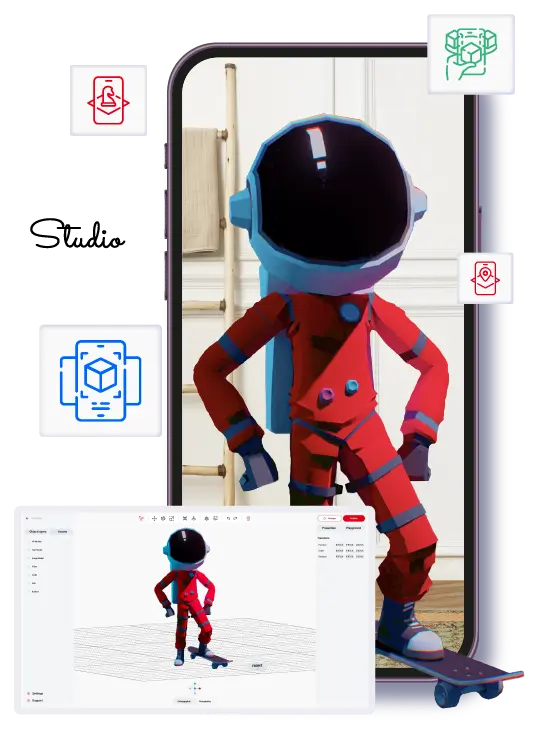
ARLOOPA Studio fits this workflow because it is built for no-code AR creation across multiple use cases. Teams can create, test, and publish without rebuilding the process from scratch each time the concept changes.
- •Plan for revisions early. The faster the review cycle, the better the pilot usually becomes.
- •Use the no-code workflow to test multiple concepts before scaling one of them.
- •Treat publishing as part of the product process, not as the last step after creativity is done.
Step 4
Measure the first live version and improve from evidence
After launch, watch what users actually do. Do they open the experience? Do they finish it? Do they understand the point quickly? Do they continue to the next action? These observations should drive the next iteration. The goal is not to prove the first version was perfect. The goal is to learn whether the format and content are doing useful work.
This is where a no-code platform compounds its value. If the experience needs a tighter intro, lighter assets, clearer copy, or a different trigger, the team can change the project without re-entering a heavy development cycle.
- •Measure launch performance against the actual objective, not only against curiosity metrics.
- •Use the first pilot to establish workflow, QA, and audience expectations.
- •Improve based on behavior, then scale the concepts that keep proving value.
Workflow
Most no-code AR projects move through the same five practical steps
The process usually starts with the trigger and the business outcome. Before any media is uploaded, the team should know whether the experience will be opened from an image, a product surface, a browser link, a location, or a face effect, and what the user should do after interacting. Only after that decision should the team prepare assets, define the content sequence, and decide how success will be measured. That sequence keeps the project grounded in an outcome rather than in abstract AR enthusiasm.
From there, a no-code platform should make the remaining steps predictable: import assets, build the interaction, preview on target devices, publish, then iterate based on feedback. ARLOOPA Studio is designed around that practical flow. It reduces the number of handoffs between strategy, creative, and execution, which is exactly why no-code AR matters for teams that need to launch responsibly without maintaining a custom engineering backlog.
- •Start with the trigger and post-interaction action before building anything.
- •Prepare assets for mobile reality, not only desktop review.
- •Preview, publish, and revise in short cycles instead of waiting for a perfect first build.
FAQ
Create AR without coding FAQ
Can you build AR without coding?
Yes. With the right no-code AR platform, teams can build and publish AR experiences without writing custom code for each project.
What is the hardest part of no-code AR creation?
Usually not the tool itself. The hardest part is choosing the right format, preparing good assets, and keeping the interaction focused on a clear outcome.
Which teams usually create AR without code?
Marketing, education, innovation, content, and agency teams often use no-code workflows because they need speed and flexibility more than custom engineering overhead.
Should the first AR project be large?
Usually no. A smaller pilot is better because it validates the trigger, content, and user flow before the team commits to a bigger rollout.
Existing Studio pages
Related Solutions
Use these established Studio pages when you need deeper solution or industry detail beyond this guide.
No-Code AR Platform Guide
Compare no-code AR platforms by workflow ownership, supported formats, publishing friction, and how well they hold up after the first prototype.
Open pageARLOOPA Studio
Create WebAR, image-tracked, markerless, face-tracked, and geospatial AR experiences without code. Build, publish, and manage AR campaigns faster with ARLOOPA Studio.
Open pagePricing
Compare ARLOOPA Studio pricing plans for WebAR, geospatial AR, image tracking, and no-code AR creation, and choose the right option for your team or business.
Open pageSchedule a demo
Book a demo with ARLOOPA Studio to see how your team can create no-code augmented reality experiences for marketing, education, events, packaging, and product storytelling.
Open pageContinue reading
Related Reading
These supporting guides answer the next practical questions readers usually have before launching an AR project.
AI for AR Creation
Use AI to reduce production friction in AR ideation and asset prep, not to avoid strategic decisions that still need human judgment.
Read guideMarker-Based AR Guide
Use marker-based AR when the physical trigger matters and you want predictable, guided activation behavior.
Read guideImage Tracking AR Guide
Choose image tracking AR when a known visual target should control the timing and context of the experience.
Read guide